Learn why SEO is a long-term investment, how it works, and what you need to get started. Perfect for beginners who are just getting into it.
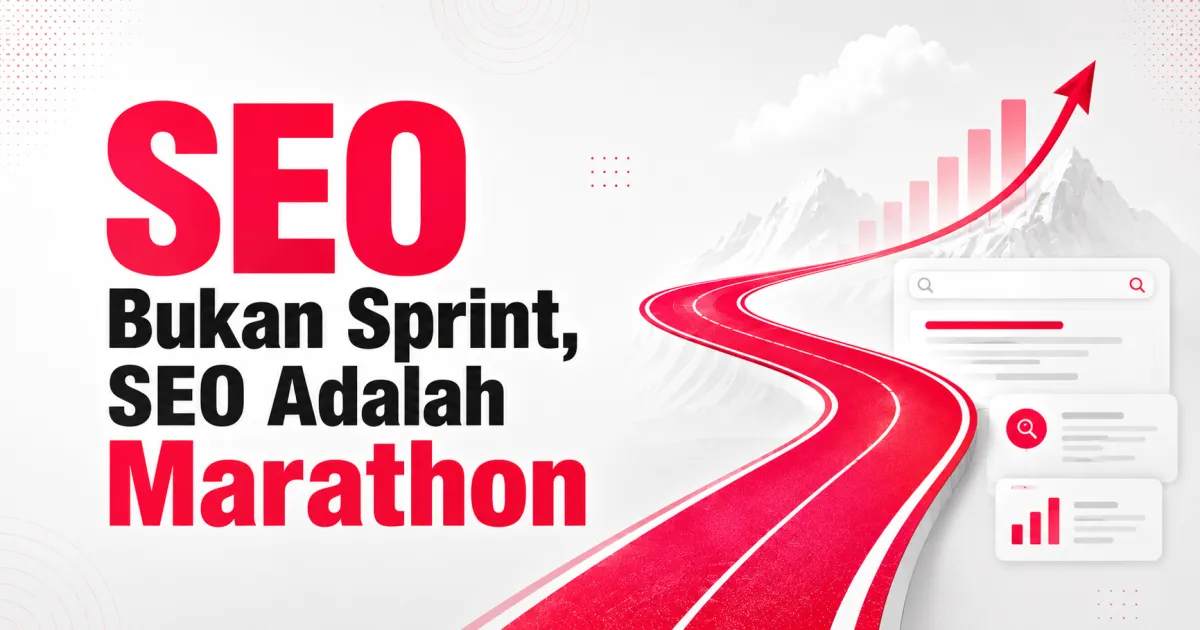
SEO Is Not a Sprint, SEO Is a Marathon
“SEO is not a quick win — it’s a long-term investment.”
What Is SEO and Why Is It Not About Tricks?
SEO, or Search Engine Optimization, is a set of efforts to make your website easy to find on Google organically.
Real SEO is about helping Google understand that your content and website are genuinely useful to people who are searching for something.
Google uses hundreds of ranking factors — called ranking signals — to determine which pages are the most relevant to show. Our job is to meet as many of those factors as possible, organically and honestly.
SEO as a Long-Term Investment
A 2023 Article That’s Still Driving Traffic in 2026
In my own case, articles we wrote back in 2023 are still the biggest contributors of traffic to our website to this day.
No ads. No boosting. Just SEO.
That means content created once — seriously and with structure — can keep bringing in visitors for months or even years afterward.
With SEO, an article that’s already ranking will keep working as long as the content stays relevant. That’s why I call it a long-term investment.
->Articles on your website — Google indexes them, then surfaces them to the right people, repeatedly, over the long term.
When someone types a specific keyword into Google, it serves up the pages it considers most relevant and high-quality. If your article fits that criteria, it will keep appearing every time someone searches for something similar — without you having to do anything more.
That’s what makes SEO content fundamentally different from regular social media content.
Why Is Traffic from Google More Valuable?
It’s About Search Intent
People who search on Google already know what they want. They arrive with a clear intent — not just scrolling aimlessly.
For example, someone who types “best physiotherapy in Bekasi” (my personal experience) — I was already ready to visit a clinic. I just needed the right reason to choose one from the search results.
If your content appears at the right moment — the conversion potential is far higher than traffic from anywhere else.
That’s why businesses serious about long-term growth almost always invest in SEO. Because traffic from Google isn’t just about the numbers — it’s about the quality of the people who show up. That’s the simple logic behind SEO.
The Technical Foundation You Must Have
Before talking about content, there’s one thing beginners often overlook: your website’s technical foundation needs to be in order first. Think of a website like a shop — content is the product you’re selling, but if the door is hard to open and the address isn’t on the map, who’s going to find you?
Some of the technical elements worth paying attention to:
- Website Architecture & CMS — a clean URL structure and logical navigation make it easier for Google to crawl your site.
- Meta Title & Meta Description — the text that appears in Google search results. It should include your main keyword and be compelling enough to click.
- Google Search Console — a free tool from Google to monitor how it sees your website, indexing errors, and keyword performance.
- Google Tag Manager — manage all your tracking codes in one place without needing to edit your website’s code every time.
- Page Speed & Mobile-Friendly — loading speed and mobile appearance are ranking factors Google takes very seriously.
- HTTPS / SSL Certificate — non-negotiable. A website without HTTPS is flagged as “unsafe” by Google and browsers alike.
This isn’t a list you need to complete in a day. But the more of these you have in place, the better positioned your website is to compete in search results.
How to Monitor Your SEO Performance
SEO without monitoring is like watering a plant without ever checking on it — you won’t know if it’s growing, wilting, or already dead. Every practitioner has their own approach, but there are at least 4 basic metrics you need to understand:
- Organic Clicks — how many people clicked through to your website from Google search results.
- Impressions — how many times your website appeared in search results, even if it wasn’t clicked.
- Average Position — your average ranking on Google for a given keyword. Positions 1–10 means you’re on the first page.
- CTR (Click-Through Rate) — the percentage of people who clicked after seeing your site appear. A low CTR usually means your Meta Title or Description needs work.
All of these metrics can be monitored directly through Google Search Console and Google Analytics 4 — both are free and more than enough for beginners.
Simple SEO Dashboard — Free
As part of this learning journey, I also put together a simple Google Sheets dashboard that I use myself to monitor monthly SEO performance. It already includes sample data (dummy) so that you (as a beginner) can immediately start learning how to read it and draw insights from it.
If you’d like to try it, feel free to download it at the link below — it’s free, I hope it’s useful:
Download GSheet Dashboard SEO Sederhana — Madani Digital
If you have any questions or want to discuss, feel free to drop a comment or send a direct message. Let’s learn together! 🙌